The Nashville Number System has evolved into a complete method of writing chord charts and melodies-combining Nashville shorthand with formal notation standards. The Nashville Number System is 130 pages with a step by step method of how to write a Nashville number chart for any song. The Nashville Number System Part 1. Davey T Hamilton. PDF Download Song Charting Made Easy A PlayAlong Guide to the Nashville Number System PlayAlong Read Full Ebook. New Ipad Video Lessons Discount Review Discount Bonus Download Scam Program Ebook Pdf Get Free System Buy Special. Dance Classes Lessons Nashville.
If you are an experienced musician, you probably are already familiar with the Nashville Number System or have at least heard of it. For those of you who are not familiar with it, it is definitely a useful system to know.
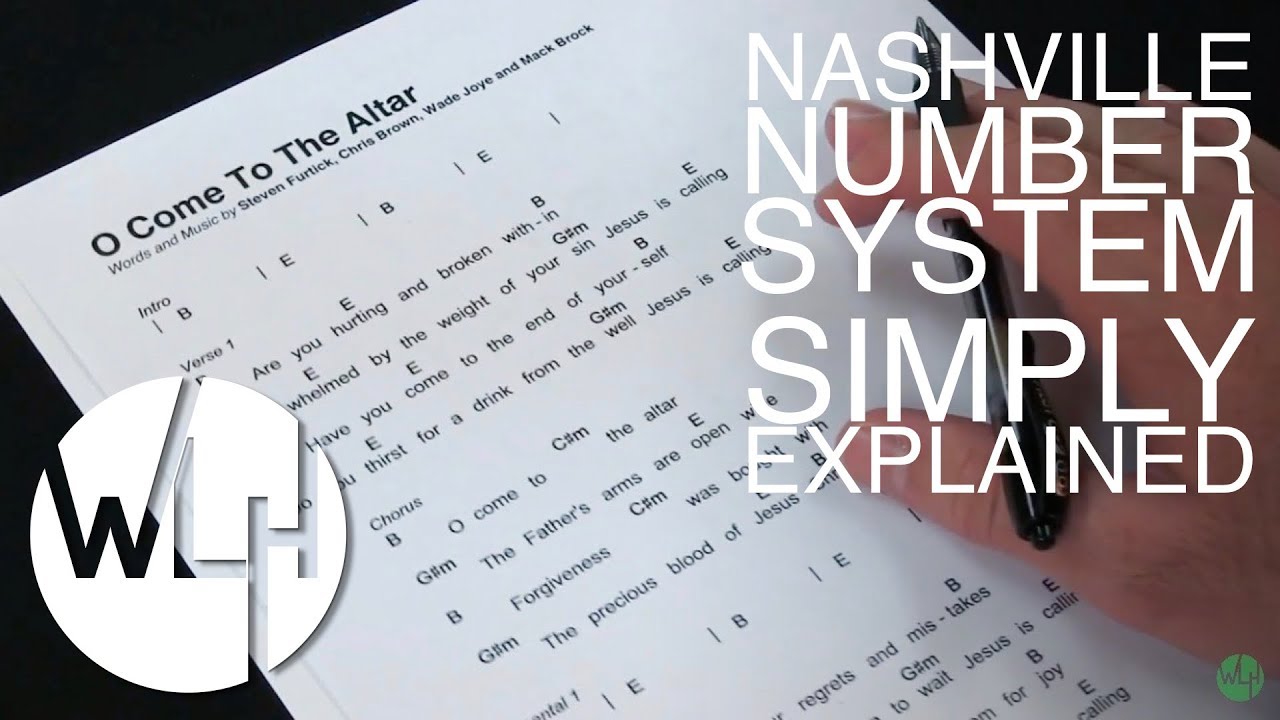
The Nashville Number System (also just called the number system) is a way of writing the chords to a song in a 'universal' or neutral key using numbers instead of chord names. This way the song can be played in any key at any time with out rewriting it.
How It Works
We start by taking the key the song is in and writing the scale. For example if we are in the key of D, we write a D scale.
DEF♯GABC♯D
We then assign numbers to each of these notes.
12345671DEF♯GABC♯D
Now each of these numbers becomes a chord.
1 is a D chord.
4 is a G chord.
♭7 is a C chord.
3m is an F♯ minor chord.
etc.
These chords are then used in songs.
This is just a very brief look at the system. For a better understanding you should check out The Nashville Number System Ebook.
So why is this useful?
Now you're probably asking, 'Why would I take the time to do this?' The answer is simple: because everybody in the music industry uses the Nashville Number System. You know, 'when in Rome'? In fact, most Pros and good amateurs will usually assume you already know how to use it.
But WHY does everyone use it? When you write out a song in numeric notation like this, the numbers can be applied to any key. So this example can now be translated to C instantly:
1 = C
♭7 = B♭
4 = F
1 = C
2 = D
5 = G
1 = C
1 = C
But what if you're in the studio and the lead singer says 'It's a little too low, let's go to D.' Easy. Use the formula:
D C G D E A D D
'Still too low. E♭?' Not a problem.
E♭ D♭ A♭ E♭ F B♭ E♭ E♭
Obviously you wouldn't be rewriting this every time. The more you use this and the more familiar you are with your scales, the less you have to think about it. '1 4 5 in D? Easy, that's D G & A.'
Now SOMEONE out there is asking 'Couldn't I just transpose it from key to key without this?' Yes. Technically you could transpose it from A to E♭. 'So you'd measure the distance from A to E♭, which is 6 half steps. So then your next chord is G, so six half steps from G is.. oh yeah D♭. So now, six half steps from D is.. uhh A♭. And then six half steps from A again is uh.' ZZZZzzzzz.. ZZZZZzzzzz..
Or you could just start on E♭ and use the same numbers you already had. See why we use it now?
Metal Fight Beyblade Ginga is a determined beyblader; he will fight 100 beys from the Face Hunters and meet Kyouya. Metal fight beyblade sub. Looking To Watch Metal Fight Beyblade Anime For Free? Watch online subbed at AnimeKisa. The anime you love in HD and without ads. Metal fight beyblade subbed Play all Share. Sign in to YouTube. Metal Fight Beyblade Episode 1 Subbed Part 1/3 by Jennifer. The stage is now set for one of the most dramatic showdowns in Metal Fight Beyblade: Baku. Beyblade Burst GT (Gachi) Ongoing Beyblade Burst Gachi is the fourth season of Beyblade Burst, and the eleventh season of Beyblade overall. Metal Fight Beyblade Anime Sub (2009) Ginga is a determined beyblader; he will fight 100 beys from the Face Hunters and meet Kyouya. Share on Facebook Share on Twitter Share on Linkedin Share on Pinterest Share on Reddit.
If this still seems a little hard at first, just trust me. When you learn your scales and numbers, it is a bazillion times easier than the other way. And THAT is why everyone uses the Nashville Number System.
Again, this is just a very brief look at it. Click here to learn more about it.
more.. Pro Advice • Last CallI did a session a little while ago with a guest keyboard player who had painstakingly transcribed every note he planned on playing. He was über-prepared but regrettably misguided, because once the singer decided he wanted to try the song up a half step, this guy was screwed. When I handed him a number chart, he looked like he was going to sob, pee his pants, and then hide. The poor bastard was an egghead who knew a lot about music but never took the time to learn the down-and-dirty stuff that working musicians use every day: the Nashville Number System.Literally, everybody working a decent gig in Nashville reads number charts—including every good engineer and drummer, even though they’re not playing notes, per se. It’s a brilliant system that allows players to change keys to accommodate any moody singer immediately. They can be written quickly and sight-read easily after a bit of practice. Much like chord charts, they don’t give you the melody, but you can write out simple signature parts in numbers. For those who haven’t yet learned the Nashville Number System, I present to you the keys to the kingdom.
Everybody writes charts a bit differently. Mine tend to be sloppy, but they all have the same basic format. In short, a line is usually four to eight measures. Each number denotes the scale degree of your key signature. All standard symbols for music apply.
FIGURE 1. An example of an eight-bar progression written with the Nashville Number |
If your singer wants to modulate to A, the A is now your 1, D is your new 4, etc. It’s amazing how much information you can convey with just a few numbers and symbols. Figure 2 shows a list of a few symbols that you will eventually see in Nashville Number System Charts. Next time you’re recording or learning a song, write a number chart. Eventually, you’ll be able to read them without thinking so you can get down to just playing.
FIGURE 2.
Common Nashville Number System symbols.
John Bohlinger
John Bohlinger is a Nashville guitar slinger who works primarily in television, and has recorded and toured with over 30 major label artists. His songs and playing can be heard in major motion pictures, major label releases and literally hundreds of television drops. Visit him at: youtube.com/user/johnbohlinger or facebook.com/johnbohlinger